

At the World Health Day 2026 held on 7 April at the Kamuzu University of Health
Sciences (KUHeS), Prof. Sosten S. Chiotha highlighted the critical role of climate
science, agriculture, and ecosystem management in advancing Malawi’s One Health
agenda.
This year’s global theme, “Together for Health: Stand with Science,” was contextualized
through a national panel discussion under the theme “Together for Science: Advancing
One Health for People, Animals and Ecosystems in Malawi.” The session brought
together leading experts including Dr. Mike Chisema, Dr. Victoria Mukhula, Dr. Lucy
Ntilatila, George Jobe, and Maziko Matemba, reflecting the multisectoral nature of the
One Health approach.
During the discussion, Prof. Chiotha emphasized that climate-resilient agriculture is
central to reducing One Health risks in Malawi. He noted that practices such as
agroforestry, soil and water conservation, and sustainable land management are not
only improving food security but also reducing environmental degradation – one of the
underlying drivers of disease emergence.
He further underscored the importance of strengthening livestock systems to minimize
zoonotic disease risks. Improved animal health management, combined with integrated
surveillance and closer collaboration across agriculture, veterinary, and environmental
sectors, is helping to reduce transmission pathways while supporting more resilient
livestock production systems.
Addressing antimicrobial resistance (AMR), Prof. Chiotha highlighted it as an emerging
threat requiring urgent, coordinated action. He stressed the need for integrated
monitoring systems and responsible use of antibiotics across both human and animal
health sectors, supported by stronger policy frameworks and increased public
awareness.
In addition, he pointed to the growing role of early warning systems and climate-health
data integration in strengthening national preparedness. Advances in predictive tools
and environmental monitoring are enabling Malawi to move beyond reactive responses
toward proactive, risk-informed planning, helping to identify and address the
environmental drivers of disease before they escalate.
Prof. Chiotha concluded by calling for sustained investment in science, data systems,
and multisectoral collaboration. He emphasized that integrating ecosystem
management with health and agriculture is essential for long-term prevention and
resilience.
Overall, his message was clear: achieving One Health in Malawi requires coordinated,
science-driven approaches that link climate resilience, sustainable agriculture, and
ecosystem stewardship to safeguard the health of people, animals, and ecosystems.
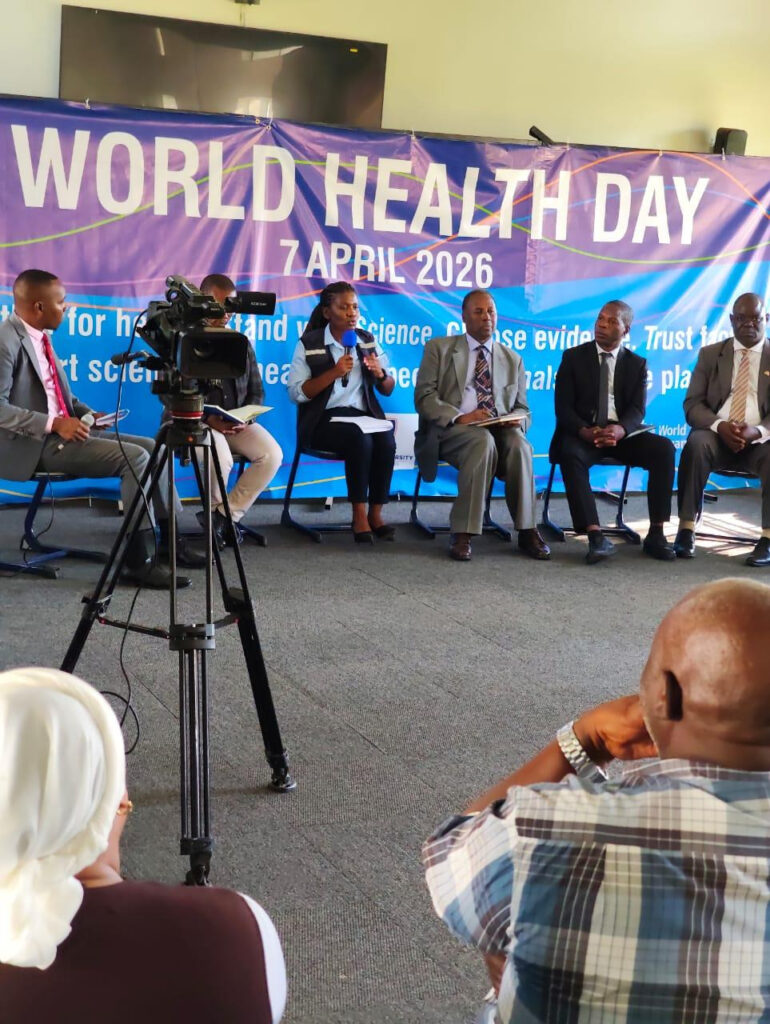
Panellists at the World Health Day 2026 at KUHeS engage in a dynamic discussion on
advancing One Health through science, collaboration, and climate-resilient solutions for
Malawi.