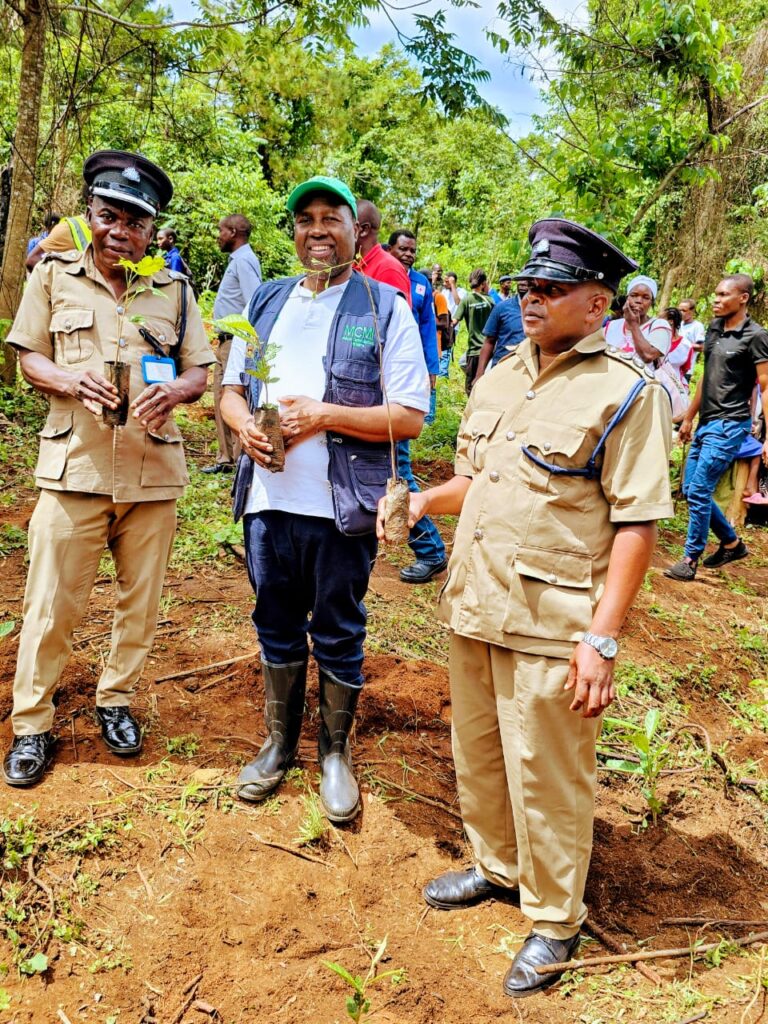
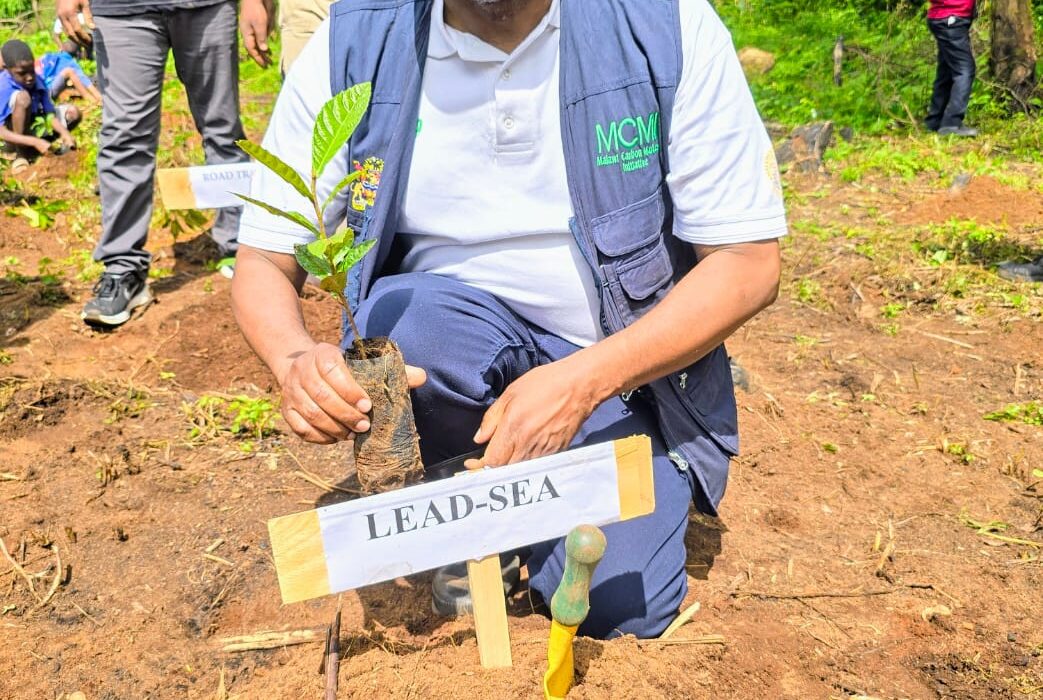
The Director of LEAD SEA, Prof. Sosten S. Chiotha (Centre, Photo 1), joined key stakeholders in this year’s tree planting exercise organised by the Southern Region Water Board (SRWB). The activity took place on 20th February 2026 at the source of the Mulunguzi River and around Mulunguzi Dam – the main catchment area supplying potable water to Zomba and surrounding districts.
As population growth continues to increase water demand, safeguarding the dam’s catchment area has become more critical than ever. The planting of indigenous tree species was strongly emphasised, given their proven role in strengthening watershed stability. Indigenous trees protect water sources, reduce soil erosion, and improve water infiltration – thereby enhancing the long-term water storage capacity of Mulunguzi Dam.
In addition to their ecological benefits, indigenous trees are more resilient to drought and climate stress, resulting in higher survival rates. They also preserve important cultural and medicinal knowledge within local communities.
LEAD SEA participated in the initiative as part of its broader advocacy for healthy ecosystems. Functional ecosystems sustain biodiversity, regulate water and climate systems, enhance soil fertility, reduce disaster risks, and support livelihoods and human well-being. Tree planting in critical catchment areas therefore represents not just environmental action, but an investment in sustainable water security and community resilience.